A look into two barren sites transformed by syntropic gardening
- Dylan Hettick-Harlow

- Jul 25
- 3 min read
Updated: Aug 10
I’ll be adding a series of videos and information on the techniques I have used and the progress that’s been made at two syntropic gardens that were once barren sandy compacted soil with grass & allelopathic species.
This video shows how much change can happen from just two months after starting to regenerate a patch of soil- even right next to asphalt and generators. Normally I try to keep soil as in-tact as I can; using a broadfork to aerate and loosen the soil without fully tilling it. In this case, however, these invasive bunch grasses have extremely resilient and deep root systems; so I had to dig out the top 7 inches of soil and remove the roots by hand. I laid handfuls of semi-decomposing blackberry bramble and small branches from nearby into the hole that was left. I mixed in a bunch of discarded brush & woodchips from the bottom of a nearby hill with the soil I dug out. After putting the soil back, I covered the soil with a half inch layer of mulch over the soil; made from invasive Porcelainberry and Border Privot from the property boundary. I’ll have an updated video shortly on the updated progress; the growth is about twice the size now. The radishes and sunflowers have now gone to seed and those seeds have been harvested; giving way to Okra, Millet, Lemongrass, red cabbages, sage & thyme, Cherokee Trail of Tears Beans, Garlic, and various colonizer species. The colonize species are nurtured until almost going to seed; then are cut down and added to a homemade liquid fertilizer system or laid directly back onto the soil as mulch.
This is a brief look at some donated seeds I installed at the other site; converting a rock wall into a syntropic sight that will transition into an abundant herb and native wildflower garden. For this season theres a fair number of other crops growing here too- I’ll be posting updated photos soon on those. The turnips have gotten insanely large over the last month or so especially; with a couple becoming larger than one entire hand. More to come soon.
Here we have a section of the same rock wall project just about 2 months later. The perimeters of each area along the wall has been lined with decomposing logs found on the same site. The closeup here shows one of those logs bearing what I believe to be a species of oyster mushroom. The plants right behind the log consist of lemon grass, Lacy Phacelia, one turnip, two peas plants, and a native bunch grass… all not only growing next to each other but thriving and rapidly regenerating the soil below them. This is one of many hundreds of thousands of combinations of crops and plants that can benefit each other when grown together.
A brief list of the native species planted include:
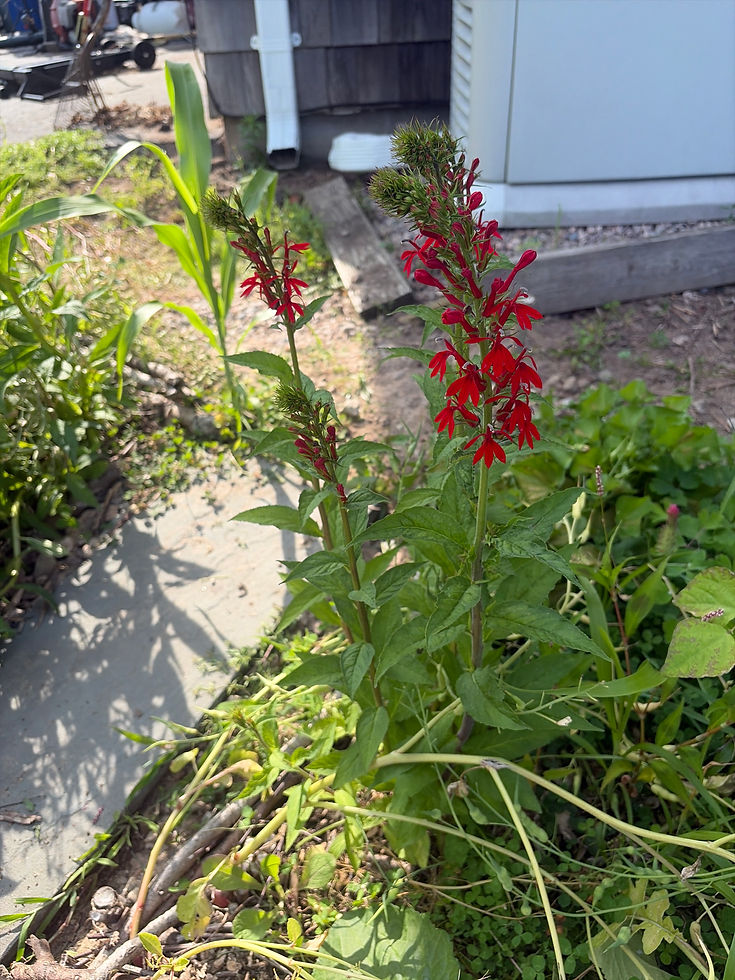
•Cardinal Flower (Lobelia cardinalis)
*a favorite amongst hummingbirds and acts as a nectar source throughout the majority of early through late summer.
•Narrow-Leaved Blue Eyed Grass (Sisyrinchium angustifolium)
•Spotted St John’swort (Hypericum punctatum)
•Blue Toadflax (Nuttallanthus canadensis)
*immune to absorption of heavy metals and great for disturbed or contaminated soils.
•Horseweed (Erigeron canadensis)
•Virginia Pepperweed (Lepidium virginicum)
*Both greens and seeds are an edible wild mustard substitute.
•Eastern Black Nightshade (Solanum ptychanthum)
*Edible berries when fully black colored and tastes like a savory combination of tomatoes and blueberries.
•Switchgrass (Panicum virgatum)
*grows root systems that can reach dozens of feet below the soil and absorbs contaminants & pollutants. Root systems also help sequester water deeper into the soil.
•Meadow Garlic (Allium canadense)
*Edible wild onion species.
•Straw Colored Flatsedge (Cyperus strigosus)
*Native grass-like species with seeds beloved by ground-foraging birds such as mourning doves
•Great Plains Sedge (Cyperus lupulinus)
*Same as straw colored flatsedge
•Three-Seeded Mercury (Acalypha gracilens)
*a native plant from the spurge family but without the toxic white sap; produces seeds that are also eaten by ground-foraging birds
•Foxglove Beardstongue (Penstemon digitalis)
*showcases beautiful white colored tubular flowers that attract multiple species of native bumblebees and pollinators
•Sawtooth Sunflower (Helianthus grosseserratus)
*a native sunflower with much much smaller flowers than your conventional black oil sunflower; the seeds are beloved by various finch species and songbirds. This species spreads through underground rhizomes and shoots up slender stalks that provide partial shade for the other crops
•Sneezeweed (Helenium autumnale)

Comments